
Your garage door springs are the unsung heroes of your home. They counterbalance hundreds of pounds of door weight, cycling up and down thousands of times per year. But like all mechanical components, they have a finite lifespan — and when they fail, the results can be dangerous and inconvenient.
At Top-Notch Garage Doors, serving Whitsett, Burlington, Greensboro, and the greater Piedmont Triad area, we handle spring replacements daily. Here is everything homeowners need to know about recognizing the warning signs, understanding the risks, and making informed decisions about repair.
Understanding Garage Door Springs
There are two main types of garage door springs: torsion springs (mounted above the door opening on a metal shaft) and extension springs (mounted along the horizontal tracks on either side). Torsion springs are more common in modern installations throughout North Carolina homes due to their smoother operation, longer lifespan, and safer failure mode.
A standard residential garage door weighs between 130 and 350 pounds depending on size, material, and insulation. Your springs counterbalance this weight so that the opener motor — which generates only about 10 pounds of force — can move the door efficiently. Without functioning springs, the door is essentially dead weight.
Most torsion springs are rated for approximately 10,000 cycles — one cycle being a full open-and-close operation. For a typical household in Whitsett or Burlington that opens their garage door 4 times per day, that works out to roughly 7 years of service life. Families with teenage drivers or home-based businesses may cycle their door 8–10 times daily, cutting spring life to 3–4 years.
Warning Signs Your Springs Are Failing
1. The Door Feels Heavy When Lifting Manually
Disconnect your opener by pulling the red emergency release handle. Lift the door manually to the halfway point and release. A properly balanced door with healthy springs should stay in place — hovering at whatever height you leave it. If it drops immediately or feels significantly heavier than you remember, the springs are losing tension and nearing end of life.
This is the most reliable early warning sign and something we recommend every homeowner in the Triad area test twice per year.
2. Visible Gaps in the Torsion Spring
Torsion springs are tightly wound coils. When they break, the two halves separate and you will see a visible gap of 2–3 inches between the coil sections. This is unmistakable once you know what to look for. If you see this gap, your spring has already completely failed — do not attempt to operate the door.
3. The Door Opens Unevenly or Tilts
If one side of the door lifts faster than the other, creating a visible tilt during operation, you likely have a spring issue. For doors with two extension springs, one may have broken while the other continues to function. For torsion spring systems, the spring may have lost calibration on one side of the drum.
4. A Loud Bang from the Garage
A breaking torsion spring releases enormous stored energy and produces a loud, sharp sound — often compared to a gunshot or a heavy object falling. Many homeowners in quiet neighborhoods like Gibsonville and McLeansville have called thinking someone was breaking in, only to discover a broken spring. If you hear this sound, do not attempt to operate the door.
5. The Opener Motor Strains
If your garage door opener suddenly starts making grinding noises, pauses during operation, or can only lift the door partway before stopping, worn springs may be forcing the motor to compensate for lost counterbalance. This puts dangerous stress on the opener and can burn out the motor — turning a $250 spring replacement into a $750 opener replacement.
6. Jerky or Uneven Movement
Healthy springs provide smooth, consistent force throughout the opening arc. Worn springs may cause the door to move in jerky increments, hesitate at certain points, or accelerate unexpectedly. This is especially noticeable when the door is closing — it may drop faster than normal for the last 12–18 inches.
Why DIY Spring Replacement Is Dangerous
Garage door springs store lethal amounts of energy. A standard torsion spring on a 16x7 door has approximately 200 inch-pounds of torque when fully wound. This is enough force to break bones, sever fingers, or cause fatal injuries if the spring or winding bars slip during adjustment.
Every year in the United States, thousands of emergency room visits result from garage door spring injuries — and fatalities, while rare, do occur. Professional technicians use specialized winding bars, safety equipment, and training that takes years to develop. This is not a YouTube tutorial project.
At Top-Notch Garage Doors, our technicians carry proper insurance, use calibrated equipment, and follow manufacturer-specified procedures for every spring installation. We serve the entire Piedmont Triad — from Whitsett to Greensboro to Elon — with prompt spring replacement service.
What Professional Spring Replacement Looks Like
When you call us for spring replacement, here is the complete process:
- . **Full system inspection** — We examine springs, cables, drums, bearings, and all hardware before starting
- . **Correct spring identification** — We measure wire gauge, inside diameter, coil count, and spring length to ensure exact replacement
- . **Safe tension release** — We carefully unwind the old spring using calibrated winding bars
- . **New spring installation** — We install springs rated for your specific door weight
- . **Precision calibration** — We adjust tension until the door passes a balance test at multiple heights
- . **Complete lubrication** — We treat all moving components with professional-grade lubricant
- . **Multi-cycle testing** — We run the door through 4–6 full cycles to verify smooth operation
- . **Safety check** — We verify all safety sensors, emergency release, and auto-reverse function correctly
Spring Options and Lifespan
Standard springs (10,000 cycles) are the most common and affordable option. For households that open their garage door 4 times daily, expect approximately 7 years of service.
High-cycle springs are available in 25,000-cycle and 50,000-cycle ratings. While they cost 30–60% more upfront, they last 2–5 times longer — often paying for themselves by eliminating a second or third replacement over the life of the door. We recommend high-cycle springs for:
- Active households (6+ cycles per day)
- Rental properties where you want to minimize maintenance calls
- Commercial applications
- Homeowners who plan to stay in their home long-term
Preventive Maintenance Extends Spring Life
Regular maintenance significantly extends spring life. Our recommended maintenance schedule for Piedmont Triad homeowners:
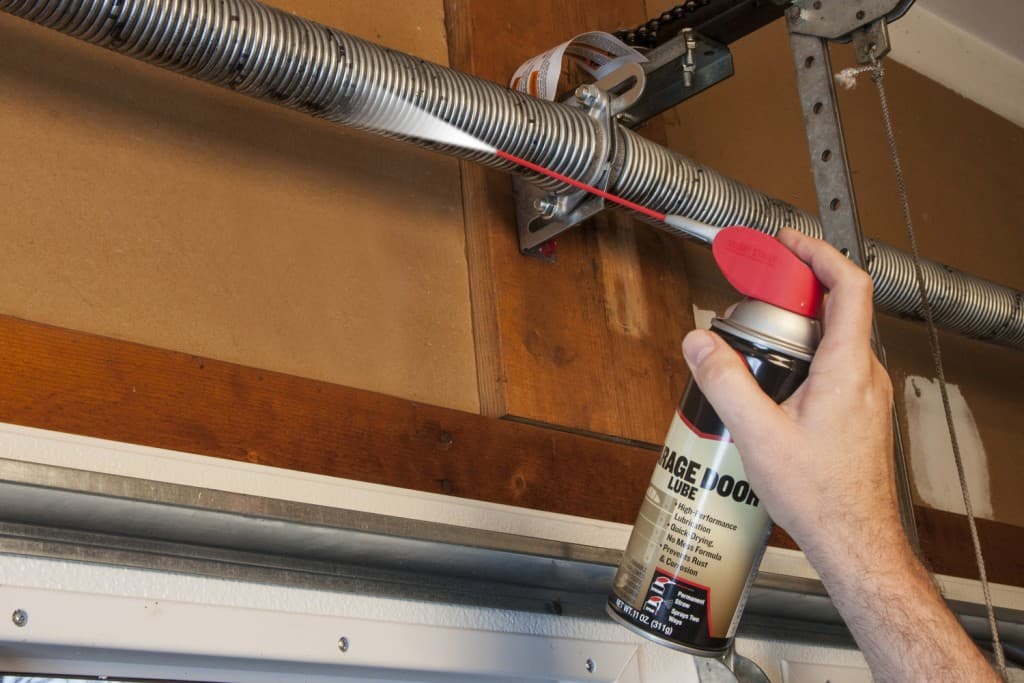
- **Every 6 months:** Apply silicone or lithium-based lubricant to the spring coils, bearing plates, and cable drums
- **Annually:** Perform a balance test (disconnect opener, lift door halfway, release)
- **Annually:** Visual inspection for rust, discoloration, or deformation
- **Every 2 years:** Professional tune-up with tension verification
Avoid using WD-40 on springs — it is a solvent and degreaser, not a lubricant. It will strip existing lubrication and accelerate corrosion. Use products specifically designed for garage door components.
When to Call for Service
Contact Top-Notch Garage Doors immediately if you notice any warning signs above. Operating a garage door with failing springs puts dangerous stress on the opener motor, cables, and other hardware — potentially turning a single-component repair into a multi-system failure.
We serve Whitsett, Burlington, Greensboro, Gibsonville, McLeansville, Elon, and the surrounding Piedmont Triad area with fast spring replacement for most residential doors. We stock the most common spring sizes on our trucks, so your repair can often be completed in a single visit.
Call (336) 604-6494 or book online to schedule your spring inspection or replacement today.
Need help with your garage door?