
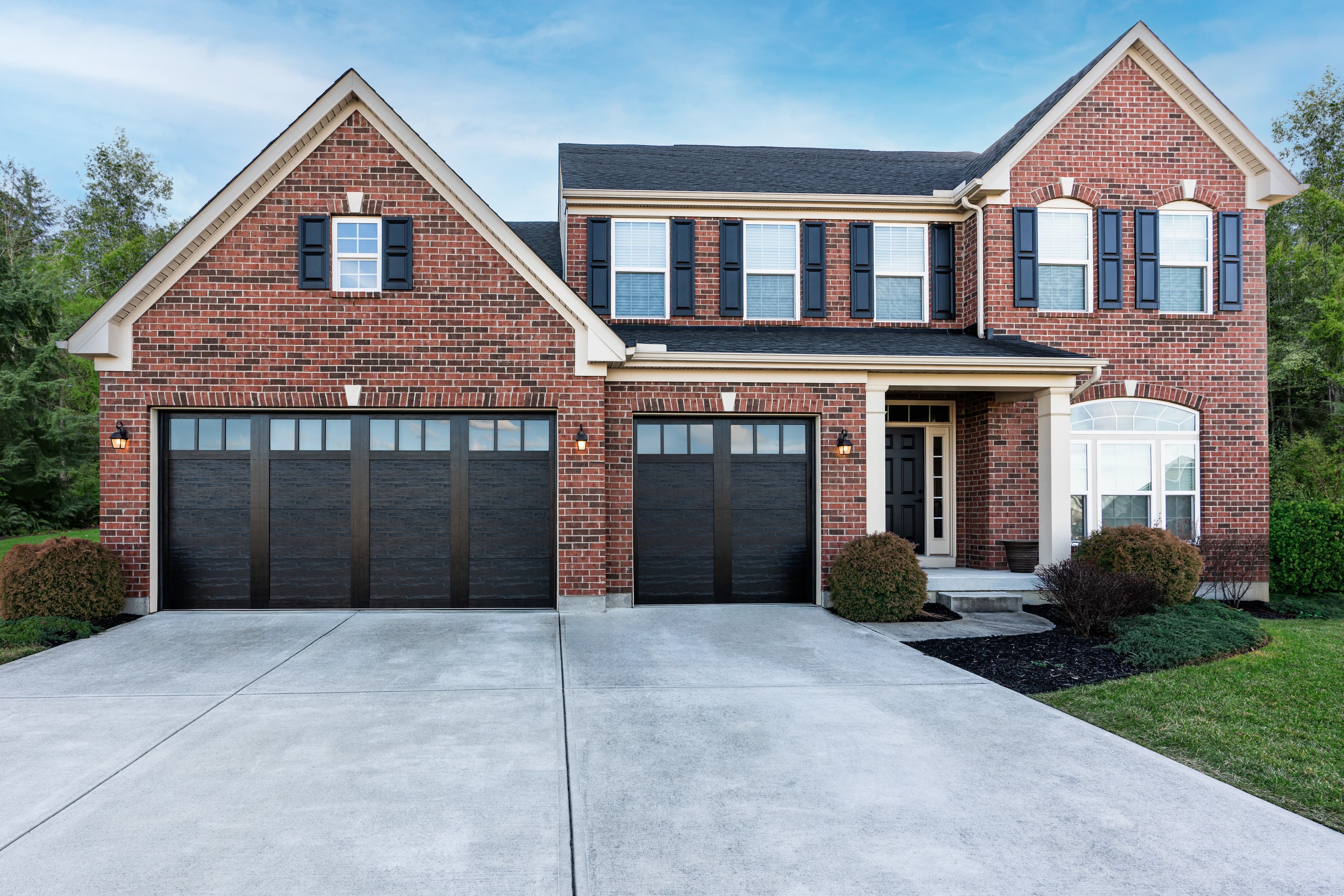
Before you call for repair, many garage door opener issues can be diagnosed — and sometimes resolved — with basic troubleshooting. This guide covers the 8 most common opener problems we see in Whitsett, Burlington, Greensboro, and surrounding Piedmont Triad homes, with step-by-step diagnostic instructions.
Important safety note: If any troubleshooting step reveals a broken spring, snapped cable, or door off-track, STOP and call for professional service. These are mechanical issues beyond opener troubleshooting and require trained technicians.
Problem 1: Opener Doesn't Respond to Remote or Wall Button
Likely causes: Power failure, tripped breaker, burned fuse, or motor failure.
Diagnosis steps:
- . Check if the opener's ceiling light turns on when you press the wall button. If yes, the opener has power — skip to Problem 2. If no light and no sound at all, continue below.
- . Check that the opener is plugged in. Vibration can gradually work the plug loose from the ceiling outlet over months.
- . Check your electrical panel for a tripped breaker. Garage openers are often on shared circuits with outdoor outlets, holiday lights, or workshop tools that can trip the breaker.
- . If the outlet is GFCI-protected (has Test/Reset buttons), press Reset. GFCI outlets in garages trip frequently in NC humidity.
- . Test the outlet with a known-working device (phone charger, lamp). If the outlet is dead with the breaker on, you have an electrical issue requiring an electrician.
- . If the opener has power (light works) but the motor makes no sound when you press the button, the motor or logic board may have failed. This requires professional diagnosis.
Resolution: Steps 1–5 resolve about 40% of "dead opener" calls we receive. If power is confirmed and the motor is silent, call for service.
Problem 2: Opener Hums or Clicks But Door Doesn't Move
Likely causes: Stripped gear (most common), locked door, disconnected trolley, or broken spring.
Diagnosis steps:
- . First, visually check the torsion spring above the door. If you see a gap in the coil, the spring is broken — this is why the opener can't move the door. Call for spring replacement.
- . Check if the door is manually locked. Some doors have a slide-lock that engages from the inside. Ensure it's disengaged.
- . Pull the emergency release (red handle). Try to lift the door manually. If it lifts easily, the problem is between the opener and the trolley (likely a stripped gear inside the opener). If the door won't lift, the spring is broken.
- . Look at the trolley carriage on the rail. If the emergency release was previously pulled and never re-engaged, the opener runs but doesn't connect to the door. Press the wall button — if the trolley moves along the rail but the door stays put, re-engage by pulling the handle and reconnecting.
Resolution: A stripped gear is the most common cause of "hums but won't move" in openers older than 5 years. Gear replacement costs $150–$250 installed. If the opener is older than 10 years, full replacement with a modern smart opener often makes more economic sense.
Problem 3: Remote Works But Wall Button Doesn't (or Vice Versa)
Wall button dead, remote works: - The wall button or its wiring is faulty. Check for loose wire connections at the button and at the opener terminal block. Tighten with a small screwdriver. - If connections are tight, the button itself may have failed. Test by briefly touching the two wires together at the opener terminal — if the door moves, the button is bad. Replacement buttons cost $15–$30.
Remote dead, wall button works: - Replace the remote battery first. This solves 60% of remote failures. - If battery is fresh, try reprogramming the remote to the opener (consult your opener manual for the Learn button procedure). - If multiple remotes fail simultaneously, the opener's radio receiver may have failed. Try pressing the Learn button on the opener and re-pairing. - Aftermarket remotes sometimes lose compatibility after opener firmware updates. Use OEM remotes when possible.
Problem 4: Door Reverses Immediately After Closing
Likely causes: Safety sensor misalignment, close-force setting too sensitive, or track obstruction.
Diagnosis steps:
- . **Check safety sensors:** Look at the LED indicators on both sensors at the base of the door frame.
- - Sending sensor (usually has an amber/yellow LED): Should be solid/lit.
- - Receiving sensor (usually has a green LED): Should be solid. If blinking, the beam is not reaching it.
- . **Clean sensor lenses:** Wipe both lenses with a dry, clean cloth. Dust, cobwebs, and condensation can block the beam.
- . **Check alignment:** Both sensors must point directly at each other. Use a level to verify they're at the same height. Loosen the wing nut and adjust until the receiving LED goes solid.
- . **Sun interference:** Direct afternoon sunlight hitting the receiving sensor can overwhelm the infrared beam. Install a sun shade (small cardboard tube or commercial shade) over the receiving sensor.
- . **Check for obstruction in the tracks:** A small rock, ice, or bent track section can cause resistance that triggers the auto-reverse.
Resolution: Sensor issues account for 70% of "door reverses" calls. Most are solved with cleaning and alignment — a 5-minute fix.
Problem 5: Door Opens But Won't Close (Lights Blink)
Likely cause: Safety sensor issue (the opener is telling you something is wrong via the blinking pattern).
This is specifically the scenario where the wall button causes the opener light to blink (typically 10 times) but the door won't close. The opener is detecting a sensor fault.
Diagnosis: - Count the blinks. Most openers use blink codes: 10 blinks = sensor fault, 4 blinks = sensor wiring issue, 1-2 blinks = travel limit issue. - Follow the same sensor troubleshooting as Problem 4 above. - Temporary override (for emergencies only): Press and HOLD the wall button continuously. On most openers, this overrides the sensor and closes the door as long as you hold the button. This is designed for situations where the sensor is temporarily problematic but you need to close the door.
Problem 6: Door Opens/Closes Partially Then Stops
Likely causes: Travel limit misadjustment, binding in tracks, or spring tension issue.
Diagnosis steps:
- . **Watch where it stops.** Is it the same position every time? Mark it.
- . **Disconnect the opener** and operate manually. If the door moves freely to full open and full close positions, the problem is opener-related (travel limits). If the door binds or gets heavy at the stuck point, it's a mechanical issue.
- . **Travel limit adjustment:** Most openers have two adjustment screws or dials — one for "up" travel, one for "down" travel. Small adjustments (quarter turns) can resolve doors that stop short.
- . **Temperature factor:** In NC's variable climate, thermal expansion causes doors to grow slightly in summer heat. If the door stopped closing fully after a hot spell, increase the down-travel limit by a quarter turn.
Problem 7: Opener Runs After Door Is Fully Open or Closed
What's happening: The opener doesn't realize the door has reached its limit. It continues trying to move the door, then disengages after the force limit is exceeded.
Diagnosis: - Up-travel too far: The opener thinks the door should go higher than it physically can. Reduce the up-travel limit. - Down-travel too far: The opener tries to push the door into the floor. Reduce the down-travel limit. - Stripped gear precursor: If the opener runs for 5–10 seconds then stops without fully completing travel, the gear may be starting to strip. This progresses to complete failure within weeks.
Problem 8: Opener Is Extremely Loud
Likely causes: Worn gear, dry chain, failing motor bearings, or loose hardware.
By sound type: - Grinding: Worn nylon gear (most common in openers 5+ years old). The nylon wears down against the metal worm drive. - Rattling: Loose hardware — check rail connections, ceiling brackets, and opener mounting bolts. - Squealing: Dry chain or metal-on-metal contact. Lubricate the chain/rail with white lithium grease. - Humming that increases over time: Motor bearings wearing. Motor replacement or full opener replacement recommended.
When to Troubleshoot vs. When to Call
Troubleshoot yourself: - Dead batteries in remotes - Tripped breakers or unplugged openers - Sensor cleaning and alignment - Basic travel limit adjustments - Hardware tightening - Chain/rail lubrication
Call for professional service: - Stripped gears - Motor failure - Logic board issues - Anything involving springs or cables - Door off-track - Recurring problems that troubleshooting doesn't resolve - Any time you feel unsafe or uncertain
Top-Notch Garage Doors serves Whitsett, Burlington, Greensboro, Gibsonville, McLeansville, Elon, and all Piedmont Triad communities. We diagnose and repair all major opener brands — LiftMaster, Chamberlain, Genie, Craftsman, and more.
Call (336) 604-6494 or book online for prompt opener service.
Need help with your garage door?