
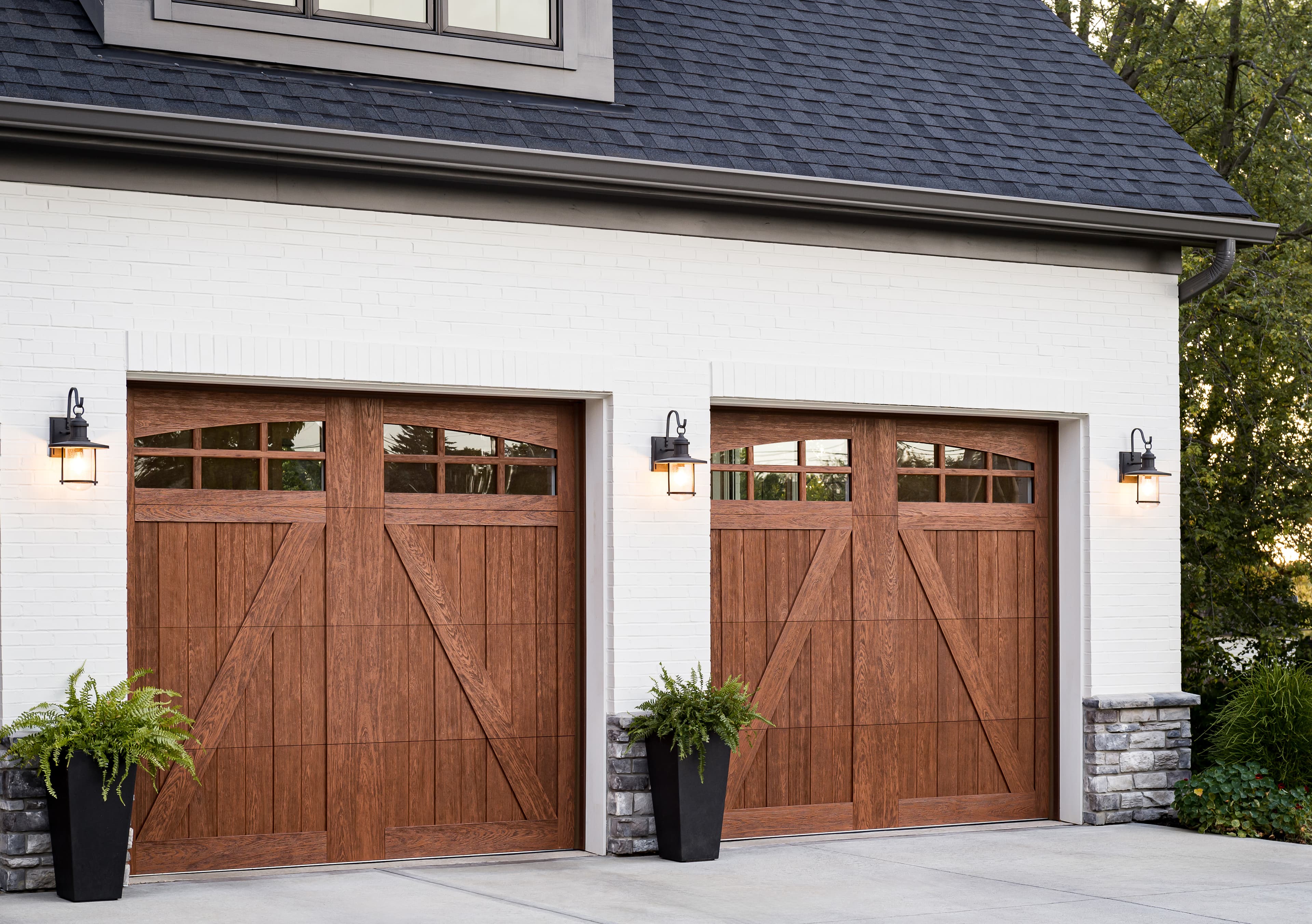
If your garage shares a wall with your living space — or if you use your garage as a workshop, gym, or hangout spot — insulation is one of the smartest upgrades you can make. For homeowners in Whitsett, Burlington, and the greater Piedmont Triad area, where summers hit 95°F+ and winters dip below freezing, garage door insulation directly affects both comfort and energy bills.
Why Insulate Your Garage Door?
The garage door is the largest moving part of your home and often the least insulated opening in the entire structure. An uninsulated single-layer steel door offers nearly zero thermal resistance. During North Carolina summers, uninsulated garage temperatures regularly exceed 120°F — radiating heat into adjacent rooms, making your HVAC system work harder, and rendering the garage itself unusable during peak heat.
Energy Savings for Piedmont Triad Homes
An insulated garage door can reduce heat transfer through the opening by up to 71% compared to a non-insulated door. For homes in Whitsett, Greensboro, and Burlington with living space above or beside the garage, this translates to measurable savings on heating and cooling bills — typically $100–$200 per year depending on your HVAC system and usage patterns.
The NC Piedmont climate features hot, humid summers and moderately cold winters. This dual-season exposure makes insulation valuable year-round, unlike regions that only benefit in one season.
Noise Reduction
Insulated doors are significantly quieter during operation. The insulation core dampens vibration and panel resonance, resulting in a door that opens and closes with a solid, quiet sound rather than the metallic rattle of a single-layer door. For homes in quiet Whitsett neighborhoods or near Elon University where early-morning departures are common, this matters.
Structural Durability
Insulated doors have a sandwich construction — steel face, insulation core, steel or vinyl back. This makes them more rigid and resistant to denting than single-layer doors. Wind resistance improves significantly, which matters during North Carolina storm season.
Understanding R-Value for NC Climates
R-value measures thermal resistance. Higher numbers mean better insulation. Here is what each range means for Piedmont Triad homeowners:
R-0 to R-4 (Non-insulated or minimal) Single-layer steel or basic polystyrene insert. Garage will be very hot in summer and very cold in winter. Acceptable only for detached garages used solely for vehicle parking.
R-6 to R-9 (Moderate insulation) Polystyrene foam panels. Good for detached garages, workshops used occasionally, or attached garages where the shared wall is already well-insulated. Provides noticeable temperature moderation.
R-12 to R-13 (Good insulation) Polyurethane foam injection. Our most-recommended range for attached garages in Whitsett, Burlington, and Greensboro. Excellent balance of cost and performance. Keeps garage temperature within 10–15°F of outdoor shade temperature.
R-16 to R-18+ (Premium insulation) High-density polyurethane with maximum panel thickness. Best for: - Living spaces directly above the garage - Home offices or gyms in the garage - Rooms sharing long walls with the garage - Homeowners prioritizing energy efficiency
For the Piedmont Triad climate (Zone 4A), we typically recommend R-12 or higher for attached garages and R-16+ when there is conditioned living space above.
Insulation Materials Compared
Polystyrene (EPS — Expanded Polystyrene)
Rigid foam boards cut to fit and inserted into door panel cavities. This is what most retrofit and budget-tier factory-insulated doors use.
Pros: Affordable, lightweight, decent performance, easy to retrofit Cons: Does not bond to panels (can shift), lower R-value per inch, less structural contribution R-value: Approximately R-3.5 to R-4.0 per inch
Polyurethane Foam (Injected)
Liquid polyurethane injected between door panel layers. Expands to fill every gap and bonds directly to the steel faces, creating a monolithic insulated panel.
Pros: Best R-value per inch, bonds to panels for rigidity, fills all gaps, excellent noise dampening Cons: Higher cost, cannot be retrofit (factory-only), requires matched door system R-value: Approximately R-6.5 to R-7.0 per inch
Reflective Foil Barriers
Thin reflective material applied to the interior face of door panels. Deflects radiant heat rather than resisting conductive heat transfer.
Pros: Very affordable, easy DIY installation, effective against radiant heat in summer Cons: Minimal value in winter, no structural benefit, can look amateurish R-value: Varies by application (radiant barrier, not true R-value insulation)
Factory-Insulated Doors We Install
The best option for maximum performance is a factory-insulated door where the insulation is integral to the panel engineering. Our top recommendations for NC homeowners:
Clopay Bridgeport Steel — Up to R-18.4 with Intellicore polyurethane technology. 3-layer construction with a durable steel exterior and vinyl interior finish. Available in multiple colors and window options.
Amarr Stratford — Up to R-17.2 with polyurethane insulation. SafeGuard pinch-resistant panels standard. 20+ colors available including wood-grain finishes.
CHI 2283 — R-12.76 with polyurethane core. Excellent value for the performance level. Deep panel design with traditional raised-panel aesthetic.
Wayne Dalton 8500 — R-7.35 with polystyrene insulation. Budget-friendly entry point for insulated doors with wind-load options available.
Retrofit Options for Existing Doors
If your existing door is structurally sound but uninsulated, retrofit kits can improve performance without full replacement. We install polystyrene panel kits that fit between door sections, typically bringing a non-insulated door to R-4 to R-8.
Important considerations for retrofit: - Added insulation increases door weight by 15–30 pounds - Your springs MUST be adjusted or replaced to handle the additional weight - Weatherstripping should be upgraded simultaneously - Retrofit insulation does not provide the structural benefits of factory-insulated doors
We strongly recommend professional installation of retrofit kits due to the spring recalibration requirement. Improper spring tension after adding weight is a safety hazard.
Installation Considerations for NC Homes
Spring Calibration Every insulated door installation requires precise spring matching. We calculate the exact counterbalance needed based on measured door weight — not estimates. This ensures safe, balanced operation and proper opener function.
Weatherstripping Package We recommend a full weatherstripping upgrade with any insulation project: - Bottom rubber seal (astragal) — prevents air, water, and pest infiltration - Side weatherstripping — seals panel edges against the frame - Top header seal — closes the gap between the top panel and header - Threshold seal — rubber strip adhered to the garage floor for a complete air barrier
HOA Compliance in Triad Communities Many Guilford County and Alamance County HOAs specify approved door styles and colors. All the insulated doors we carry are available in HOA-friendly traditional styles and standard colors. We maintain specification libraries for major Triad-area communities.
Cost vs. Return on Investment
A new insulated garage door is consistently one of the highest-ROI home improvements available. According to the Remodeling Magazine Cost vs. Value Report, garage door replacement returns over 90% of its cost at resale — higher than kitchen remodels, deck additions, or bathroom renovations.
For Whitsett and Burlington homeowners planning to sell within 5–10 years, this makes insulated door installation one of the smartest pre-sale investments available. Beyond resale, the ongoing energy savings, noise reduction, and comfort improvement are daily benefits you enjoy immediately.
Our Recommendation for Local Homeowners
Based on our experience serving hundreds of homes across the Piedmont Triad:
- **Attached garages (standard use):** Minimum R-12 polyurethane-insulated door
- **Detached garages (occasional use):** R-6 to R-9 polystyrene is cost-effective
- **Garage workshops, gyms, or living spaces:** R-16+ with complete weathersealing package
- **Homes with rooms above the garage:** R-18 with ceiling insulation coordination
Contact Top-Notch Garage Doors at (336) 604-6494 for a free insulation assessment. We will evaluate your current door, measure heat transfer characteristics, and recommend the most cost-effective insulation solution for your specific home and usage pattern. Serving Whitsett, Burlington, Greensboro, Gibsonville, McLeansville, Elon, and all surrounding communities.
Need help with your garage door?