
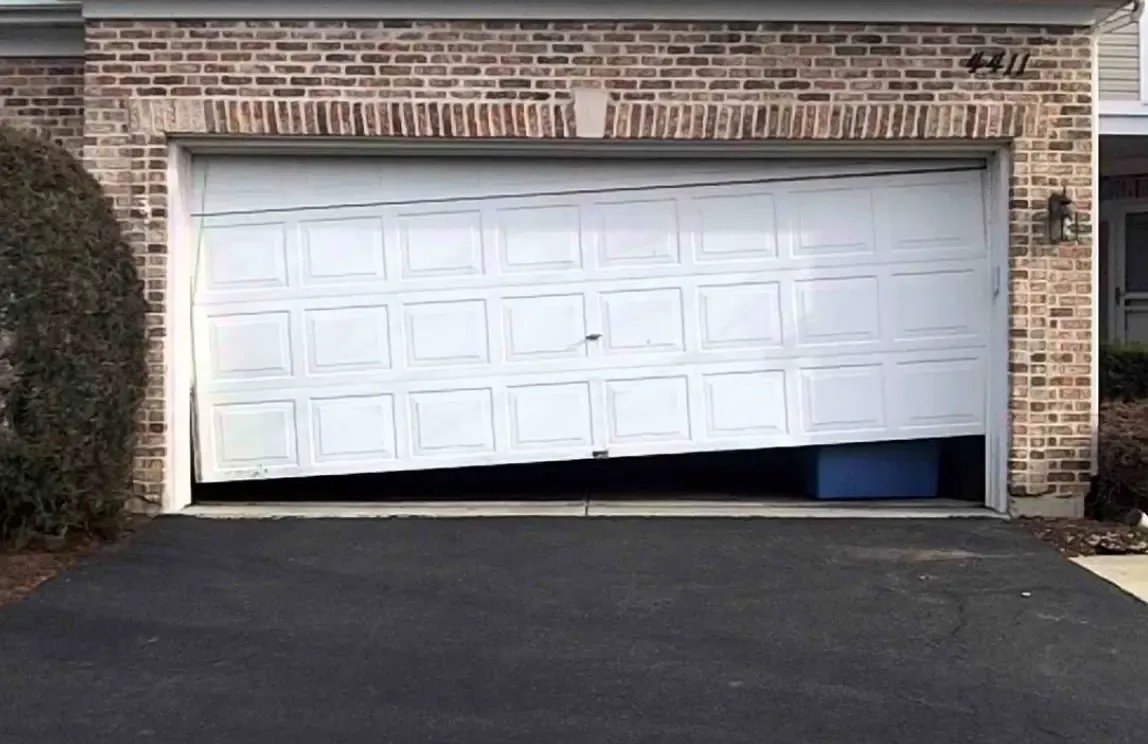
It is 6:30 AM. You are running late for work. You press the remote and nothing happens. Or worse — the door starts moving, makes a horrible grinding sound, and stops halfway. Your car is trapped inside, your morning is derailed, and you need help fast.
Garage door emergencies happen without warning. At Top-Notch Garage Doors, serving Whitsett, Burlington, Greensboro, and the greater Piedmont Triad area, we handle emergency calls daily. This guide covers exactly what to do in the most common emergency scenarios — and equally important, what NOT to do that could make things worse or put you in danger.
Scenario 1: The Door Won't Open At All
What's likely happening: Broken torsion spring (most common), dead opener motor, disconnected cable, or power failure.
Immediate steps:
- . Check if the opener has power — is the ceiling light on? Try the wall button.
- . Check your circuit breaker. Garage door openers are often on shared circuits that trip during storms.
- . Look at the springs above the door. If you see a visible gap or separation in the coils, the spring is broken. STOP HERE — do not attempt to open the door manually.
- . If springs appear intact, pull the red emergency release handle (hanging cord from the trolley). This disconnects the door from the opener.
- . Attempt to lift the door manually from the bottom. If it lifts easily and stays up, the problem is the opener — not the door. If it's extremely heavy, the spring has failed even if you can't see the break.
What NOT to do: - Do NOT use the emergency release if the door is partially open and you suspect a broken spring — the door could slam down under its own weight - Do NOT attempt to pry the door open with tools - Do NOT try to manually wind or adjust springs - Do NOT drive your car into the door to force it open (yes, this has happened)
When to call: If the spring is broken, if the door won't lift manually, or if you're unsure what's wrong — call immediately. We offer fast emergency response throughout the Piedmont Triad.
Scenario 2: The Door Is Stuck Halfway
What's likely happening: Broken cable, roller jumped the track, obstruction in the track, or opener gear failure.
Immediate steps:
- . Do NOT press the remote or wall button again — if something is mechanically wrong, forcing additional cycles can cause further damage.
- . Check for visible obstructions in the track (toys, tools, debris).
- . Look at the cables on either side — are they hanging loose or visibly off the drum?
- . Check if a roller has popped out of the track (visible at the track seam or curve).
- . If you can identify a simple obstruction, remove it carefully. Otherwise, leave the door in position and call for service.
What NOT to do: - Do NOT hang from the door or add weight to force it down - Do NOT attempt to hammer rollers back into tracks - Do NOT disconnect the opener while the door is partially open (unless springs are intact — the door may crash down)
Safety note: A door stuck halfway is unstable. Keep children, pets, and vehicles away from underneath it until it's professionally secured.
Scenario 3: The Door Came Off the Track
What's likely happening: Impact damage (vehicle hit the door), broken cable caused the door to shift, worn rollers jumped the track at the curve, or bracket failure.
Immediate steps:
- . Do NOT operate the door in any way — remote, wall button, or manual. Moving a derailed door causes cascading damage.
- . Secure the area. A door off-track can shift or fall without warning.
- . Call for professional service immediately. This is not a DIY repair under any circumstances.
What causes this: The most common cause in Piedmont Triad homes is a vehicle backing into the door while it's partially open. Second most common is a cable failure that allows one side to drop while the other stays engaged, twisting the door off its tracks.
Scenario 4: Loud Bang and Door Won't Move
What happened: Your torsion spring broke. The bang was the sound of a tightly-wound steel spring snapping and releasing stored energy. This is one of the most common garage door emergencies in residential homes.
Immediate steps:
- . Do nothing with the door. Leave it in whatever position it's in.
- . Do NOT attempt to manually open or close it.
- . Look at the spring above the door — you will likely see a clear gap where the spring separated.
- . Call for emergency spring replacement.
Why it's urgent: A broken spring means the full weight of the door (130–350 lbs) is unsupported. Operating the opener with a broken spring can burn out the motor, snap cables, or cause the door to crash down.
We stock the most common residential spring sizes on every truck. Most spring replacements in Whitsett, Burlington, and Greensboro take 45–90 minutes.
Scenario 5: Door Closes Then Immediately Reverses
What's happening: Safety sensor issue, close-force setting too sensitive, or track/roller obstruction causing resistance.
Immediate steps:
- . Check the safety sensors at the bottom of the door frame. Both LEDs should be solid (one green, one amber on most models). If one is blinking, the beam is misaligned.
- . Check for cobwebs, dirt, or condensation on the sensor lenses — clean with a dry cloth.
- . Check for objects between the sensors (even small items can break the beam).
- . Look for sunlight hitting the receiving sensor directly — afternoon sun can interfere with the infrared beam.
This is usually not an emergency — it's a safety feature working as designed. However, if you cannot identify and resolve the sensor issue, the door is effectively stuck open. Call for service before nightfall for security.
Scenario 6: Power Outage — Door Won't Open
What's happening: No electricity to the opener. If your opener doesn't have battery backup, it cannot power the motor.
Steps for manual operation during a power outage:
- . Ensure the door is fully closed (if possible).
- . Lock any vehicles or secure any valuables visible through garage windows.
- . From inside the garage, pull the red emergency release handle.
- . Lift the door manually — it should move smoothly if springs are functioning.
- . The door will NOT lock in the open position without the opener engaged. You must hold it or prop it.
- . To re-engage the opener after power returns: pull the release handle again or simply press the remote/wall button. The trolley will reconnect on the first cycle.
Prevention: We strongly recommend battery backup openers for all Piedmont Triad homeowners. NC storms frequently cause multi-hour outages, and being locked in (or out) of your garage during severe weather is dangerous.
When Immediate Service Is Critical
Call immediately (don't wait) if: - Your only vehicle is trapped in the garage - The door is stuck open and you cannot secure it overnight - A spring broke and your door is the only entry point (no side door) - Weather is incoming and the garage cannot be closed - The door is partially open and unstable
We provide fast emergency response throughout the Piedmont Triad — Burlington, Greensboro, Gibsonville, McLeansville, and Elon. Most emergencies are resolved within hours of your call.
Preventing Emergencies
Most garage door emergencies are preventable with regular maintenance:
- **Annual professional tune-up** — catches worn springs, fraying cables, and misaligned tracks before they fail
- **Biannual lubrication** — extends spring life by 20–30%
- **Balance testing** — identifies weakening springs 6–12 months before failure
- **Visual inspection** — check cables, rollers, and hinges monthly for visible wear
A $100 maintenance visit prevents $500+ emergency repairs. Contact Top-Notch Garage Doors at (336) 604-6494 to schedule preventive maintenance or request emergency service.
Need help with your garage door?